



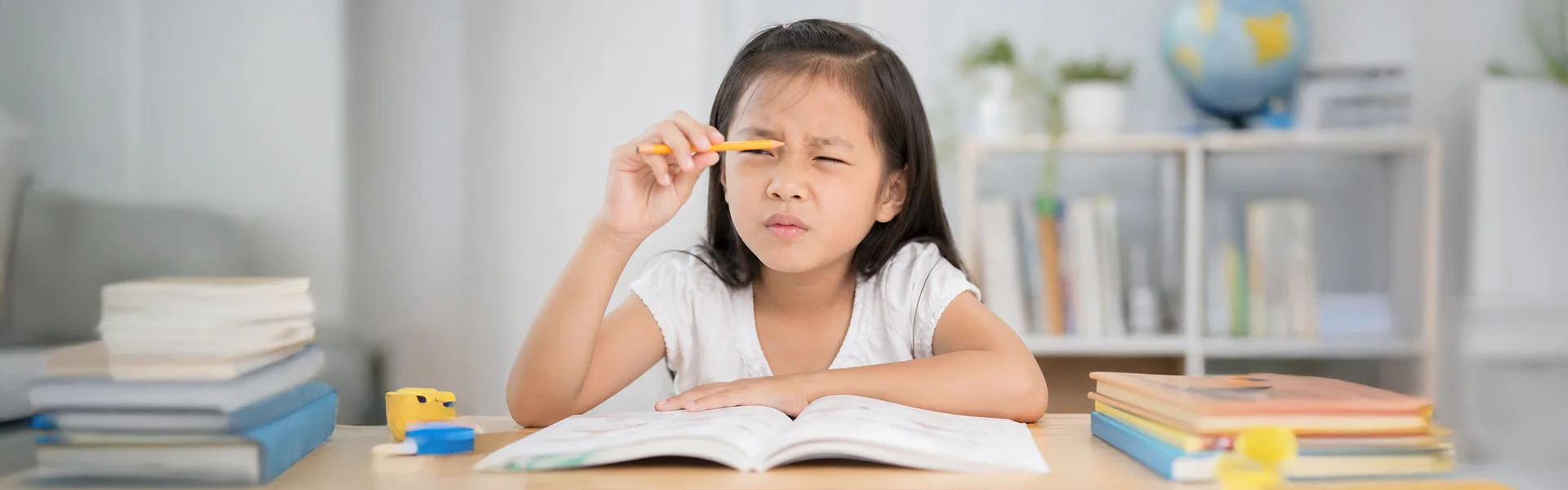
Why Does My Child Squint to See? Signs of a Vision Problem
Quick Summary
- Repeated squinting may suggest that a child’s visual system is making extra effort to bring objects into focus.
- Reduced visual clarity can affect learning, play, and many everyday experiences throughout childhood.
- Many children are unaware that their vision has changed because they have never experienced anything different.
- A comprehensive eye examination assesses visual skills that extend beyond what is usually measured during school vision screenings.
- Early detection can support healthy visual development and classroom success.
Why Do Children Squint?
Parents commonly notice squinting while their child is reading, watching television, or seeing distant objects. When a child squints while reading or repeatedly narrows their eyes during other visual activities, it may be their natural response to blurred or unclear vision.
Occasional squinting does not necessarily indicate an underlying eye condition. However, ongoing squinting may indicate that the eyes are working harder to achieve clear vision. A complete eye examination can identify the cause and help determine whether vision correction or ongoing monitoring is needed.
If you are looking for an experienced optometrist in Vaughan, scheduling a comprehensive assessment is the most reliable way to understand what may be contributing to your child’s symptoms rather than relying on observation alone.
Common Signs of Vision Problems in Children
Young children usually cannot tell when their vision differs from normal because they have nothing to compare it with. Because many vision changes develop gradually, they often assume the way they see is normal.
Some common signs of vision problems in children include:
- Frequent squinting
- Sitting very close to the television
- Holding books close to the face
- Complaints of headaches after reading
- Covering one eye while focusing
- Rubbing the eyes often without allergies
- Difficulty copying from the classroom board
- Losing interest in reading or other close-up activities
While one symptom alone cannot confirm a vision problem, persistent changes should be assessed by an optometrist.
How Vision Problems Can Affect School Performance
Clear eyesight helps children manage the many learning activities they encounter throughout the school day. Reading, writing, using digital devices, and viewing classroom materials all depend on clear focus and coordinated eye movements.
Some vision problems in school-age children can resemble learning or attention difficulties because children must work harder to interpret what they see. As a result, they may lose concentration, avoid homework, or become frustrated with reading even when they are eager to learn.
Routine eye examinations help track healthy visual development throughout childhood and may identify concerns before they begin affecting classroom performance.
What Causes Blurry Vision in Children?
Several eye conditions can cause blurry vision in kids, including refractive errors such as nearsightedness, farsightedness, and astigmatism. Eye coordination or focusing difficulties may also affect how clearly a child sees during everyday activities.
Because different eye conditions may produce similar symptoms, an examination is needed to determine the cause. During the assessment, the optometrist examines vision, focusing, eye coordination, and overall ocular health to identify any underlying concerns.
Why Comprehensive Eye Exams Matter
School and community screening programs may identify some children who need further assessment, but they cannot replace a complete eye examination.
A comprehensive children’s vision screening evaluates much more than how clearly a child can read an eye chart. It includes assessing eye coordination, focusing ability, prescription needs, visual acuity, and overall eye health. These evaluations help identify concerns that may not be obvious during everyday activities. According to the information provided by Dr. Allyson Tang Optometrist, comprehensive pediatric eye examinations are designed to evaluate visual development as well as eye health.
What to Expect in a Pediatric Eye Exam
Each pediatric eye examination is tailored to a child’s age, developmental level, and ability to participate in testing. Age-appropriate testing methods allow infants, young children, and teenagers to have their vision assessed comfortably and accurately.
The examination may include:
- Measuring visual acuity
- Assessing eye alignment and movement
- Evaluating focusing ability
- Determining whether glasses are needed
- Examining overall eye health
Dr. Allyson Tang Optometrist provides comprehensive pediatric eye care with an emphasis on patient education, clear communication, and technology that supports accurate eye health assessments.
When Should Parents Schedule an Eye Exam?
Parents should arrange an eye examination if they notice ongoing changes in their child’s vision or visual behaviour, including persistent squinting, headaches after reading, or increasing difficulty with schoolwork.
Routine eye examinations remain important because some childhood vision conditions develop without obvious symptoms. An eye examination can confirm healthy visual development or detect concerns before they begin affecting learning and daily activities.
If you are ready to book a pediatric eye exam in Vaughan, scheduling a comprehensive assessment can provide reassurance or identify concerns early so appropriate management can begin when needed.
Final Words
Squinting does not always indicate a vision problem, but frequent or persistent episodes deserve professional assessment. Prompt evaluation can identify whether squinting is linked to a refractive error, a focusing issue, or another vision condition.
Understanding how a child’s vision develops helps families and their optometrist make informed decisions about future eye care. Early attention to changes in visual behaviour can support comfortable reading, confident learning, and healthy visual development throughout childhood.